Of course, I'm assuming the worst but it's the flip side of assuming the best. In either case, they're unproven assumptions, so it's fruitless to dwell on woulda, coulda, or shoulda. The movie "It's a Wonderful Life" shows the downside of this kind of thinking when taken to its extreme. Though it's become cliché, the message is still powerful there. Besides, clichés wouldn't exist if they weren't effective with our psyche.
Search This Blog
Tuesday, January 13, 2026
Perpetual Problem with Woulda, Coulda, Shoulda
Of course, I'm assuming the worst but it's the flip side of assuming the best. In either case, they're unproven assumptions, so it's fruitless to dwell on woulda, coulda, or shoulda. The movie "It's a Wonderful Life" shows the downside of this kind of thinking when taken to its extreme. Though it's become cliché, the message is still powerful there. Besides, clichés wouldn't exist if they weren't effective with our psyche.
Tuesday, September 9, 2025
Without growth and conflict, there's no story, even for technical writers
They say without conflict or growth in a character, there's no story. But why? Is this some tired trope or does it apply in real life? Well, let's walk this through. Is there a story when you're just going through your daily routine or when you're having choose between two great job offers? Is there a story when you're ready to get married but an old flame, whom you loved dearly, showed up? What makes even more interesting the reason for your breakup was a simple misunderstanding. Stories aren't just in the realm of fiction. Stories happen all the time in the real world! Why do some people read biographies, autobiographies, memoirs or historical accounts? They deem them to be worthy stories to read.
Even the Bible, though I fully believe it's God's Word, has elements of story. Here are a few examples:
- When God tested Abraham and told him to sacrifice his Isaac in Genesis 22. (Thankfully, there was a happy ending to this.)
- The story of Joseph and his brothers in Genesis 37-50.
- Joseph (different one) found out that Mary, who we was engaged to was pregnant and he wanted to divorce her quietly in Matthew 1:18-25. But he was informed that baby was the Promised Messiah, Jesus.
- When Jesus knew His death was near, He ask God, His Father, for Him not to go through it in Matthew 26:36-45, Mark 14:32-42, and Luke 22:39-46.
My Story: Creation of a Style Guide
Tuesday, October 11, 2022
Collaborate, Collaborate, Collaborate
Monday, October 3, 2022
Benefits of technical writing
Thursday, May 27, 2021
Pen and Paper?
![]() |
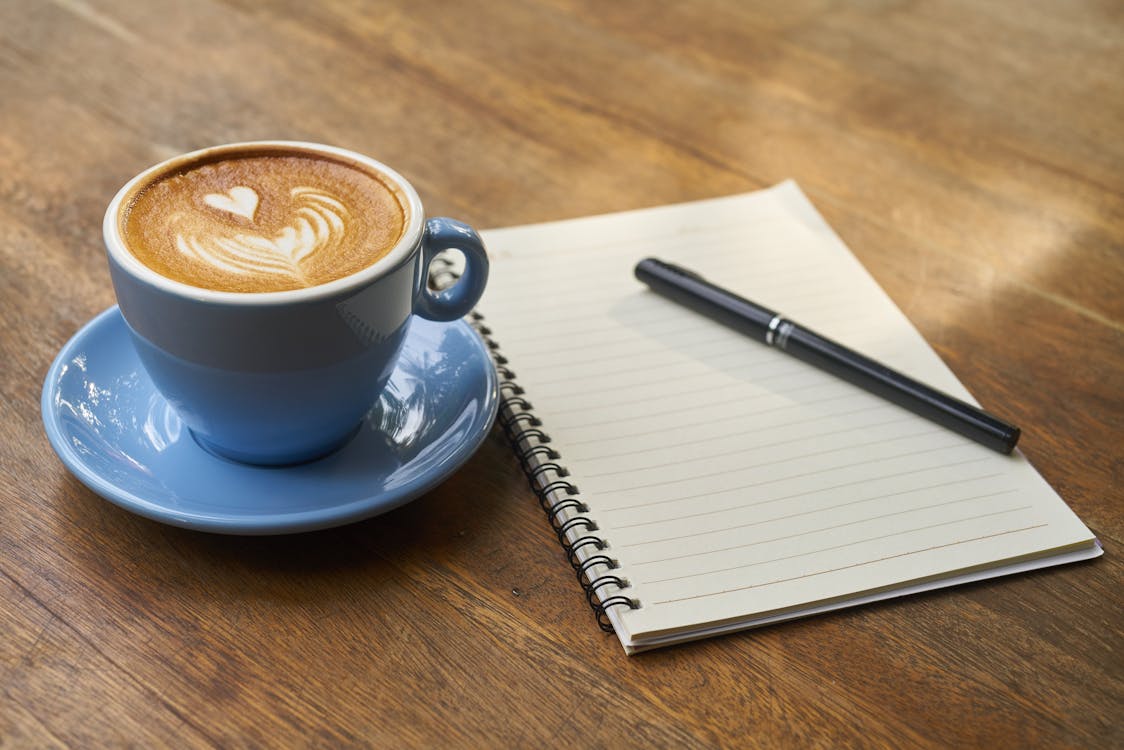
| Coffee with a Side of Pen and Paper -- Photo by Pixabay |
When we take notes with devices, such as computers and smartphones, it's easy to overlook a set of invaluable tools: pen and paper. When you interview SMEs about high-tech features and concepts, you may to want these trusty old school tools in your arsenal.
So why am I advocating something low-tech?
Computers Fail
Computers crash. (Yes, even smartphones crash too.) That's just life. You're in the middle of taking notes and then bam.
Unless you have autosave, or you're saving often, all your notes are gone. But autosave will only help you if you can get your machine up and running or if you can access your stuff on a cloud. Either way, this puts an unneeded stop in taking notes. You can avoid this by simply having a notepad and pen.
When taking notes, I recommend having at least two pens, if possible, on hand in case one dies.
Faster or At least More Natural Note Taking
Unless you're a fast and skillful typist, you can disrupt a natural flow of a conversation or interview if you rely on a machine instead of notepads and pens to take notes. If you're taking notes on a machine and you're telling a SME to slow down or repeat themselves constantly, picture the interruptions.
Also, the clicking and clacking of keys and the device itself can be distracting. Writing notes is quiet and keeps the conversation going.
Process the Information Better
Writing notes by hand increases the chances you'll understand the information better instead of typing them in a machine. And it increases the chances of you retaining the information after you written notes.
When I've taken notes by hand, I've always felt more connected and engaged with SMEs in what they're trying to say than when I've typed notes. Whenever I jot down technical concepts by hand so I can create a document, I like feel I can better understand and remember what they're saying.
One of my favorite things to do as a technical writer is physically taking notes. I enjoy putting pen to paper when I interview a SME, walk through a product myself, or both. (I've also done this well in a remote environment.)
Unleashes Creativity
Handwriting notes seems to increase creativity, which is a boon for writers especially ones with a creative bent.
According to Little Things, one of the benefits of writing things out by hand is it unleashes your creativity. On the surface, creativity and technical writing seem like oil and water. But not so. When you create a technical document, especially one from scratch and no template you need creative power.
When I've taken notes by hand, I can get inklings on how to create the document and how to arrange the information in it.
Is Typing Notes Useless?
If taking notes by hand is superior to taking notes by devices, then why do some people continue to use them instead of going back to pen and paper?
There are a good few reasons to not to handwrite notes.
One, if you have a disability. If you struggle with taking notes or unable to by hand, then by all means type, use a recorder, or any other method to record notes. Don't let anyone tell you otherwise. Use what works for you.
Two, supposedly you can write more notes by typing than by jotting them down.
Three, you can share your notes a lot easier than trying to decipher someone's handwriting. And if you're going to share, it's easier to clean up your own typed notes easier. Why bother trying to fix up your chicken scratch when you can type it.
In cases where you need to share notes, I'll concede that typing is better. Here's what one writer says in defense of typing.
Though these writers seem to tilt towards handwriting, they highlight some possible advantages to typing notes too:
https://effectiviology.com/handwriting-vs-typing-how-to-take-notes/
https://www.clearvuehealth.com/writingtyping/
But their conclusion seems to be handwriting notes is the better way to go.
What About Recorders?
Using a recorder changes the dynamics of note taking. With a recorder, I'll also concede there's a definite advantage over pen and paper. But let's not forget one thing or should I say two: What happens if the device fails or if the battery dies. When that happens and you have no back up, then that's no good.
If you're going to use a recorder, then I recommend having a notepad and pen and actively notes while you're interviewing a SME. That way, you have two ways of capturing the information. In this case, it's like two heads is better than one. And if you're doing that, you're still using pen and paper.
What About Digital Note Taking?
One plus about technology is it can eliminate some arguments or find a radical middle ground. This may be so with digital note taking.
Digital note taking seems like a good middle ground between clicking on keys or scribbling on a notepad. It seems it's the best of both worlds. So it's tempting for me to concede here too. But my response is this: What happens if the device fails when you take notes?
Commit to Keep and Bear Pen and Paper
Aside from seemingly, possible advantages of using devices, I remain committed to upholding the right to keep and bear pen and paper. For as long as I'm a technical writer, I'll use them when I interview SMEs.
I don't care what the sirens of technology and convenience say. I'm not turning them in. Neither should you. My pens and pads will stay with me. So listen here machines! You'll have to pry my pen and notepad out of my cold, dead hands. What about you?
Friday, June 21, 2019
Barriers to Entry
![]() |
| Photo by Travis Saylor |
According to the The Bureau of Labor Statistics (BLS), technical writing is growing. According to their projections, technical writing is growing faster than some other occupations. Also, according to the US News and World Report, technical writing is one of the best jobs for 2019. But it's quite possible these projections are flawed.
But the fact there are abundance of jobs, especially in tech, seem to show us technical writing is far from dead. Also, the fact there's a constant deluge of products, services, and innovations flooding society, so the possibilities to documenting them seems endless. So, what's going on? What are the possible barriers?
Ever Growing List of Requirements
One barrier would be an ever growing list of requirements to get a technical writing job. Some of these newer jobs seems to be either something for programmers or the scientist. This would be acceptable except the technical writer is just a writer at the end of the day. Though, I believe writing what you know is very important, when did the technical writer become the sole realm of the academic elite. I would like to know when that was.
If technical writing is really belongs to these elites, then I guess I have been blessed whenever I got jobs. If one from such a priest class wants to explain me that I must have X,Y, Z piece of paper or I must an engineer or a scientist or whatever role of you approved of, then I will gracefully bow of out technical writing. But don't expect me to give up on writing all together.
Misunderstanding the Role
Why do I say this? It's because SMEs might overlook some critical information when creating step-by-step information. They assume their audience will know what they mean or imply. You can't do that with technical writing. You need to spell out each step. You may not need to define the terms because of the audience you're writing for should know, unless it's something new.
When you're showing someone how to do something, you need explain this clearly and one step a time. SMEs can miss needed steps and so can the technical writer. To see how daunting a task it is to document something step-by-step, check a previous post called Count All the Steps.
As a technical writer, you need to be the independent pair of eyes to break this information down, so you can catch the blind spots the SMEs overlooked. In my experience, though interviewing SMEs help give me information on creating a document, there are still gaps in it before it's complete. What the SME gives you is a starting point. You need to go through the software or the product yourself to document how to use it before you say the document is done.
No disrespect to the Instructional Designers out there, but they are not technical writers. While the two occupations overlap quite a bit, they pursue two different goals. I have had some who asked me if I have done instructional design and I had to say no. I'm a technical writer, not an instructional designer. So, this adds to the confusion.
Too Niche Orientated
Let's talk about tools. It's a tall order for companies to expect technical writer to know every tool out there. It's impossible. And if a company wants to shut good writers out because they don't know some arbitrary tool that not everyone uses, then they will be looking for a long time. (I guess that's the point with some of these folks.)
I feel the SMEs are dictating the terms of what they want as a technical writer and want a carbon copy of themself rather than looking for a good writer. You kind of have to wonder why many instructions and technical documents are horrible.
Any good technical writer will pick up any tool, programming language, or subject that comes their way. It's intrinsic for technical writers to adapt to any situation. If any technical writer tells you otherwise, then they need to get out of the field. Give us a chance!
All About Keywords
As for resumes, what many organizations or recruiters is look for certain keywords. Some say they don't seem to looking at cover letters either way. However, some say they do. Who's telling the truth? I have no idea.
In any case, many just use Applicant Tracking Software (ATS) to scan for keywords. So, they don't bother to look at the resume. The simple fact of relying software for certain keywords rather looking at someone's experience is another barrier.
They are reducing us to keywords rather than treating us as people. You even have articles that encourage you to use keywords in your resume so you can picked up by software. While using the right keywords will help your resume stand out, keywords aren't everything. We should be looking at the person's experience. A resume is a story of that person's experience. To simply look for keywords is degrading people and their story. This is wrong! But the moment we refuse to be reduced to mere keywords, the moment this barrier will come down.
Enough with NDA Fears
While an NDA may not prohibit from sharing a sample, we also don't want to take the chance of getting sued by a company. Though the company may not have a leg to stand on from barring us from sharing a sample, an NDA is uncertain territory on whether we should have samples. I don't want to take the chance of finding out. My peers have seemed to have also taken the same overcautious road.
If you have a user guide going to your customers, then we should be able to share this since this is external communication. Perhaps, when technical writers have to sign NDAs, then there should be some exceptions for those who are in communications positions (such as copywriters or technical writers) in an organizations that we can share samples when our employment or contract ends. As for internal (not confidential) communication, we should be able to share this document with important information redacted from it.
Rethinking the Entire System
These companies are trying to make us feel like we're independent but we are really exploited by them. It's a devilish illusion!
It also doesn't help we have to compete with cheap labor from content farms or the like. Makes me so angry that they writers pennies for a lot of work. (But that's another post for another time.)
So what do we do? Let me offer some suggestions. Perhaps, technical writers should be in the realm of self-employed artisans. We should also somehow band together to form cooperatives or guilds so we can have the power to break down these barriers. Some might point out The Society of Technical Communication but it's just an association. It's not a force with teeth.
Though we need to serve our audience by creating the documentation that meets their needs, we also need to set up clear boundaries what's required to be a good technical writer. And what's required to be a good technical writer is this:
- Excellent written and oral communication skills.
- A willingness to learn new things,
- A servant's heart.
If someone is reading this, I hope you can get this conversation going. If you can better identify different barriers or better articulate them, more power to you. I'm trying to do my part to save technical writing.
Writing is a craft, including technical writing, and we should guard it as such.
Thursday, April 4, 2019
Always Expand Your Knowledge Base
The beauty of being an ever expanding knowledge base is you don't need an advanced degree. But, you need the following: - A teachable attitude
- Good communication skills
- Be an avid reader
Become an Avid Reader
Read all kinds of things, not just things pertaining to the job. Try reading anything from fantasy, science fiction, and mystery to non-fiction, news and opinion, and inspirational. I'm an avid reader. I read daily. I read more than I write. I write almost daily.
I enjoy expanding my knowledge and imagination and refining or even challenging my thinking or skills. If there's something that catches my eye, I look it up and read about it. Reading helps me become a better writer. I learn from others how to craft sentences. There are times when I will stop writing for a while just to read.
Even if you're well versed with a product line, a programming language, or industry, there's always something new to learn within them. So, try reading about what's going on in the industry and where it's heading. For if there was all there was in an industry, then I suspect there would be nothing further to document. And if there's nothing new to document, then it would be the end of technical writing.
I find being an avid reader really helps me recall or connect data points in my head when a pertinent conversation or situation arises.
(Though I don't actively read about technology or programming languages unless it's for a job, reading such works can be helpful because you become aware of possible things to write about.)
Hone Your Communication Skills
To be an ever expanding knowledge base, you need to hone in on good communication skills. These skills will actually help you grow as a technical writer. If you talk with an Subject Matter Expert (SME), you can learn a lot. You have to learn good deal about the thing you are documenting before you can document it. If you need to document similar products and services and uses the same terminology, you can just move forward with writing about them because you already talk to the SME. (Of course, you should still keep in contact with SMEs to make sure your knowledge is up-to-date.)
When I've interviewed SMEs, I get educated. I get both the big picture about the subject at hand and the details about it.
Taking notes down also reinforces what I learned from an interview. (When possible, I recommend taking notes by hand than by computer or device. Some have suggested writing notes by hand is far better than doing this digitally.)
Asking the right questions, taking good notes, and a listening ear will develop your technical writing skills. So how you can hone in your communication skills? The first and crucial step is learn how to listen. Practice active listening.
Have A Teachable Attitude
A teachable attitude is the key to become an ever expanding knowledge base.
Adhere to a New Adage
While technical writer doesn't contradict the famous adage:
"Write what you know".
we need another adage that aptly captures this strange form of writing. It should be something like:
"Before you know what to write, go find out what it is first."
Keep Your Technical Writing Alive
By being an ever expanding knowledge base, it keeps your technical writing fresh and dynamic. For me, there's rarely a dull moment in creating documents. The very nature of technical writing is open-ended and expanding. This makes it a great career path because you can grow with it.
In my earlier days of technical writing, I came up with a mantra and it's one I still use to guide my craft. It's this:
The learning never stops; you just choose to stop learning.When you stop learning, your technical writing will start dying.
Saturday, September 17, 2016
Technical Writer, a misnomer
Here goes my rant about technical writing:
What is a technical writer? A writer who writes about technical things? I guess. I don't know. It seems that what considered technical writing is a complete misnomer. Why do I say this? It seems based on the many years of experience I have, I do very little original writing. At very best, it seems I can get write in the holes to make up for missing content. Most of the time, it just seems I am spending designing documents, proofreading, editing or rewriting muddied content.
Maybe I'm being picky but when I think about technical writing, it should be about writing technical content from scratch. This should be done by research, or interviewing SME, or both. But the fact that most of time, I don't get to write original content most of the time really calls into question the moniker known as "technical writer."
And if you want to write original technical content, then you need to be a programmer or an engineer. If that's the case, then these SME should write, revise, edit, design, and publish their documents themselves. Other than proofreading, rewriting the content, if needed, and designing the document, what do they need us for?
I wonder half the time, if I'm an actually a writer or a technical typist with style (now, there's a job title). But at the end of the day, it doesn't matter. I get paid to do what I do, when I do it.
I'm not being a crybaby for not writing original content most of the time. I don't mind doing what I do. I actually enjoy it. I'm merely calling in question the label "technical writer."
Maybe other terms like "content auditor" or "technical rewriter" would be better terms. I would be fine with using terms that exists already like "document designer", "technical editor," or "documentation specialists". I think these are better terms to describe to what we do, but the term technical writer, I dunno.
Maybe you're experience is different than mine. If you have written original technical content, then great. I have written ghostwritten original tech content as well. But to most, it wouldn't be considered technical writing. I'm just saying, unless you're writing original technical content, I think it's time to rethink this job label: technical writer.
Saturday, September 10, 2016
Without a shadow of a doubt
Unless you're dealing with theories or scientific findings in white papers, technical documentation must be a rock of certainty to the user. Why? It's because you're guiding your audience to do something. If you're not instructing them, then you're guiding them along to explain some information. In either case, you shouldn't fly blind on what you're writing or editing before you publish.
Tuesday, February 2, 2016
Documentation and Gardening
I haven't suddenly shifted gears and turned this blog into a gardening one. But I think gardening and documentation have something in common: they both take tenacity and patience.
Let me draw some parallels between the two.
With technical documentation, you need to do something similar. For example, you need to find out who the audience is that you're writing for. What kind of document are you writing? What kind of questions do you need to ask the SMEs? How will you structure the document?
Answering these questions will go a long way to help you to successfully complete a technical document and create a good garden.
For example, you might need to change the location of your plants so they get more sunlight. If you have trees that have been bearing fruits for a while but the harvest declines each year, you need to prune them. There's also a possibility you need to completely uproot dead trees and plants because they're diseased or dying.
It's the same thing with documentation. Documentation isn't going to write itself. If you need to submit a technical document, you need to write it first. You may need to make adjustments to your document as it grows or evolves. For example, what you started off with may need to change because it's not reflecting the product, service, or the subject anymore. Or let's say you're documenting software and there are some new features for the upcoming release. You need to write the documentation to reflect these changes. There may even be documentation you need to trash but it's simply not applicable anymore
As a technical writer, expect you may need to do a writing and rewriting with documents you slaved away for hours, days, months, or even years. And the same thing with gardening, you may need to start over after a long time of caring for that one orchid. But if you are persistent and flexible, you should be able to overcome any obstacle that comes your way.
Wednesday, January 27, 2016
Why Placeholders
noun (plural placeholders)
Something used or included temporarily or as a substitute for something that is not known or must remain generic; that which holds, denotes or reserves a place for something to come later.
If you haven't stopped reading, let me explain why I discussing something that seems insignificant.
No job on this earth lasts forever. Job security is a myth. Work is a placeholder until something else comes along. You might need to mentally prepare yourself for this possibility.
What if they are trying remake themselves to better serve their customers? What they are being merged with another company, and the documents have to represent this change? The documents in either scenario are a part of a bigger picture that the client is trying to show to their customers.
A technical document is the result of building bridges with each other, so you can a build a bridge with the customer using the information you've written. I've seen tech writers move on to be project managers based on their experience in this aspect of technical writing.